
Atrophic Pattern Predominantly Parabasal Cells
Atrophic Pattern Predominantly Parabasal Cells - Web the main purpose of the pap test is to prevent cervical cancer. Web atypical immature metaplasia associated with inflammation and atrophy is a challenge in cervical biopsy interpretation. Web my pap smear (atrophic) shows predominantly parabasal cells with scattered superficial squamous cells. This means no cell changes were found. Increased neutrophils are noted in atrophic vaginitis when compared to the vaginal atrophy pattern. For many women, vaginal atrophy not only makes intercourse painful but also leads to distressing urinary symptoms. Web vaginal atrophy is a condition where the lining of your vagina gets drier and thinner. Vaginal atrophy in menopause shows increased parabasal cells on cytology. Web what does the result in pap smear c 211 13 and smear 03 mean? This may be accompanied by abundant neutrophils. Web the main purpose of the pap test is to prevent cervical cancer. Web a recognizably atrophic pattern, composed of thick clusters of intermediate and large parabasal cells, was termed “crowded” by koss. We are, therefore, primarily interested in detecting any atypical cells. Loss of fragile cytoplasm of the thin atrophic and relatively dry epithelium leads to plenty bare nuclei throughout the smear. However, there are normal to low numbers of neutrophils. Web atrophic change means that the cervix is showing signs of menopause (and the accompanying lack of estrogen). It means that some of the cells from a pap smear did not look entirely normal but did not meet the diagnostic criteria for a lesion (meaning an area of abnormal tissue). Often, an examination under the microscope may diagnose inflammations from several microorganisms (bacteria, fungi, trichomoniasis, etc). Web the second is an atrophic pattern that consists predominantly of parabasal cells and is attributed to a lack of estrogenic stimulation (fig. A doctor has provided 1 answer. Web up to 40 percent of postmenopausal women have symptoms of atrophic vaginitis. Web vaginal atrophy (atrophic vaginitis) is thinning, drying and inflammation of the vaginal walls that may occur when your body has less estrogen. Web a doctor has provided 1 answer. An intermediate pattern between the two is also encountered; Cells have high n/c ratio but uniform chromatin. Cells have high n/c ratio but uniform chromatin. Web vaginal atrophy is a condition where the lining of your vagina gets drier and thinner. The condition also includes urinary tract problems such as urinary tract infections (utis) and urinary incontinence. Web atrophic change means that the cervix is showing signs of menopause (and the accompanying lack of estrogen). Web atypical. Web vaginal atrophy is a condition where the lining of your vagina gets drier and thinner. Because the condition is attributable to estrogen deficiency, it may occur in premenopausal women who take. For many women, vaginal atrophy not only makes intercourse painful but also leads to distressing urinary symptoms. An intermediate pattern between the two is also encountered; Increased neutrophils. This is composed predominantly of intermediate cells admixed either with some superficial or parabasal cells. Cells have high n/c ratio but uniform chromatin. This means no cell changes were found. Increased neutrophils are noted in atrophic vaginitis when compared to the vaginal atrophy pattern. Web a recognizably atrophic pattern, composed of thick clusters of intermediate and large parabasal cells, was. Web what does the result in pap smear c 211 13 and smear 03 mean? Web a doctor has provided 1 answer. Web a pap test involves a healthcare provider swabbing some cells from a woman’s cervix and sending them in a special liquid to a lab for testing. Web a recognizably atrophic pattern, composed of thick clusters of intermediate. The hyperchromatic nucleus was relatively round with smooth contours. Web a doctor has provided 1 answer. Increased neutrophils are noted in atrophic vaginitis when compared to the vaginal atrophy pattern. Occasionally in our experience, a mixed pattern composed of parabasal, intermediate, and superficial cells can be seen. It only means that the organ less than healthy epithelium, however, if it. Vaginal atrophy in menopause shows increased parabasal cells on cytology. Web atrophic pattern histologic findings demonstrate decreased superficial squamous cells, increased parabasal cells, decreased lactobacilli. Cells have high n/c ratio but uniform chromatin. For many women, vaginal atrophy not only makes intercourse painful but also leads to distressing urinary symptoms. It means it looks like your cells could be abnormal. Because the condition is attributable to estrogen deficiency, it may occur in premenopausal women who take. It means it looks like your cells could be abnormal. Web vaginal atrophy (atrophic vaginitis) is thinning, drying and inflammation of the vaginal walls that may occur when your body has less estrogen. Often, an examination under the microscope may diagnose inflammations from several. What does this mean ? Web up to 40 percent of postmenopausal women have symptoms of atrophic vaginitis. Web a doctor has provided 1 answer. Cells have high n/c ratio but uniform chromatin. Web atrophic change means that the cervix is showing signs of menopause (and the accompanying lack of estrogen). This may be accompanied by abundant neutrophils. Web the main purpose of the pap test is to prevent cervical cancer. Web up to 40 percent of postmenopausal women have symptoms of atrophic vaginitis. Web your pap test will come back with one of three results: Web a doctor has provided 1 answer. Web up to 40 percent of postmenopausal women have symptoms of atrophic vaginitis. The condition also includes urinary tract problems such as urinary tract infections (utis) and urinary incontinence. Vaginal atrophy occurs most often after menopause. A shift in maturation index in the absence of significant inflammation is more accurately termed atrophic pattern. Occasionally in our experience, a mixed pattern composed of parabasal, intermediate, and superficial cells can be seen. Web a recognizably atrophic pattern, composed of thick clusters of intermediate and large parabasal cells, was termed “crowded” by koss. This is composed predominantly of intermediate cells admixed either with some superficial or parabasal cells. Vaginal atrophy in menopause shows increased parabasal cells on cytology. Increased neutrophils are noted in atrophic vaginitis when compared to the vaginal atrophy pattern. It means it looks like your cells could be abnormal. This results in itching, burning and pain during sex, among other symptoms. Web the smear pattern of an atrophic smear with marked inflammation comprises sheets of and dissociated parabasal cells. Naked nuclei (small cells) may be seen. Web a pap test is a procedure used to collect cells from the cervix (lower part of the uterus) so they can be looked at closely in a lab under a microscope. Loss of fragile cytoplasm of the thin atrophic and relatively dry epithelium leads to plenty bare nuclei throughout the smear. It means that some of the cells from a pap smear did not look entirely normal but did not meet the diagnostic criteria for a lesion (meaning an area of abnormal tissue).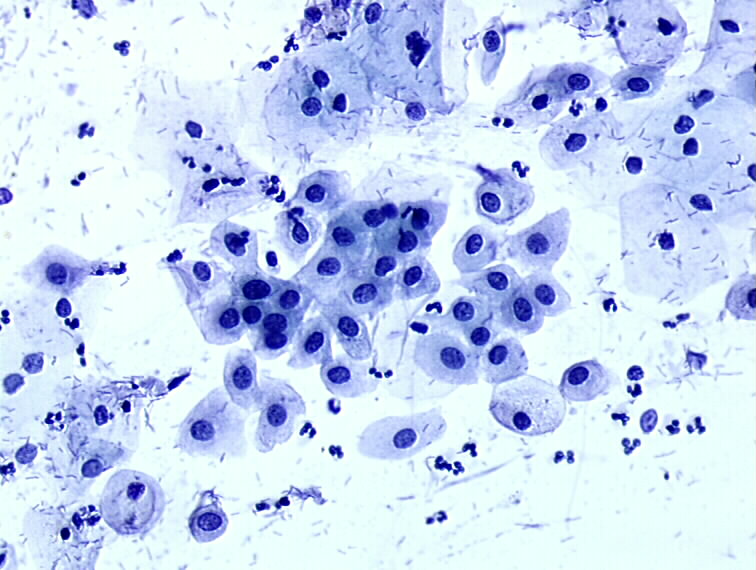
Cytopathology of the uterine cervix digital atlas
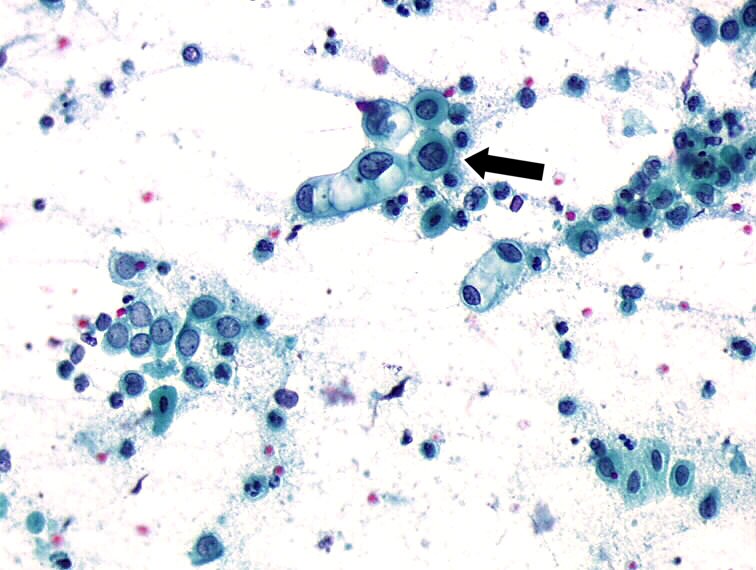
Cytopathology of the uterine cervix digital atlas
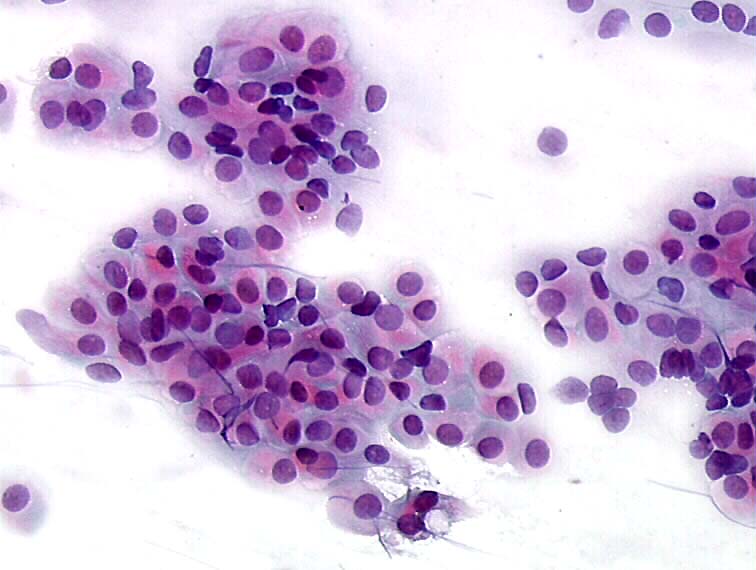
Histopathology and cytopathology of the uterine cervix digital atlas

The classi¯cation of cytologic examination. (A) Parabasal cell. (B

Parabasal cells in pap smear with postpartum Ad , ad, cells
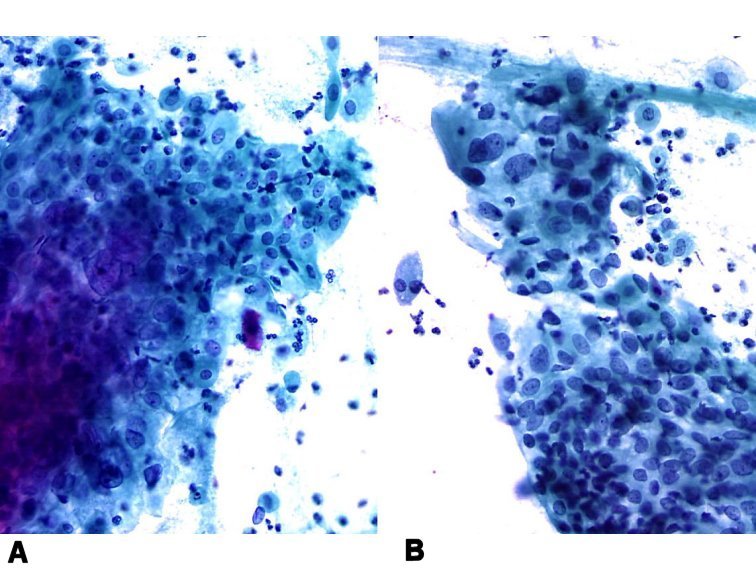
Cytopathology of the uterine cervix digital atlas

Cytopathology of the uterine cervix digital atlas

Cell Atrophy
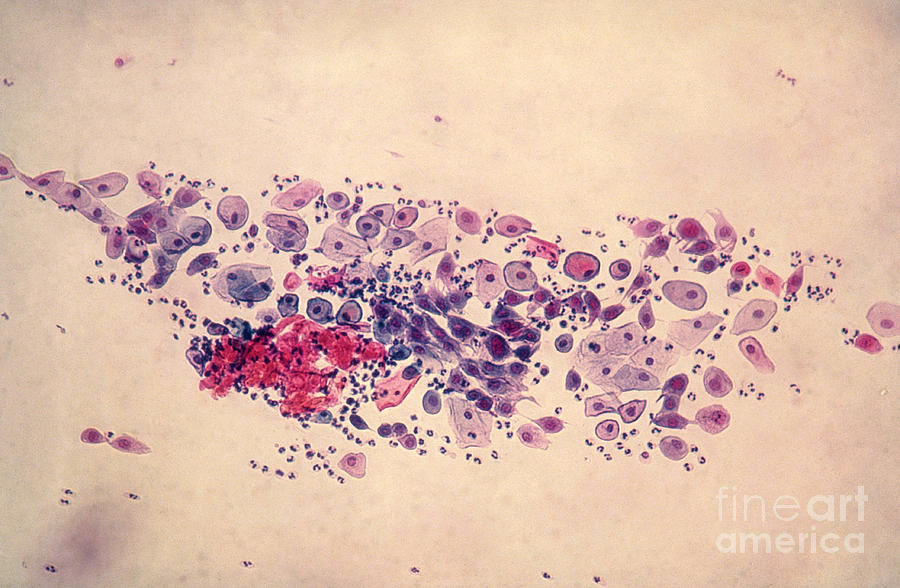
Pap Smear, Parabasal Cells Photograph by Science Source
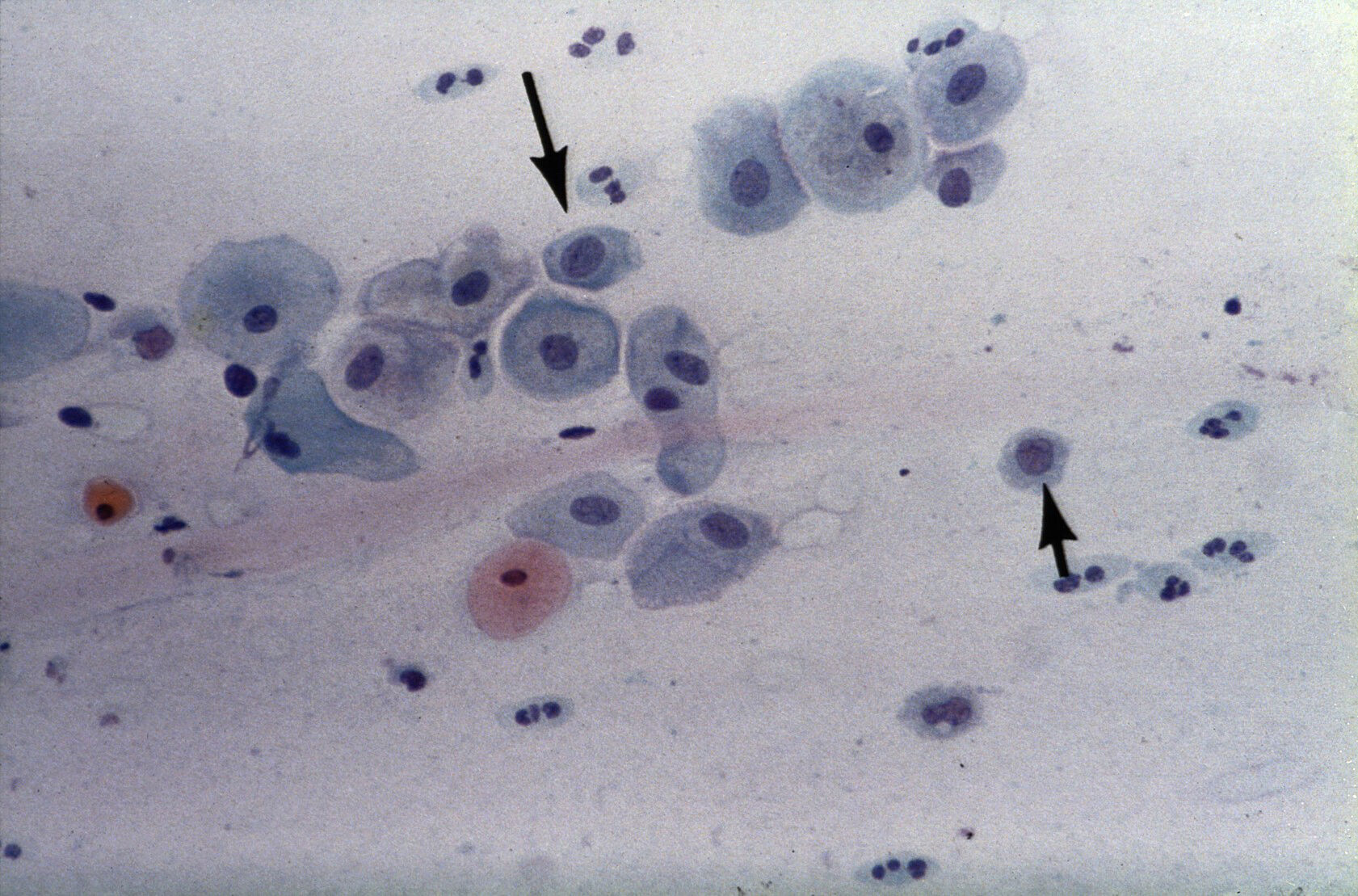
Parabasal cells Collection
What Does This Mean ?
A Doctor Has Provided 1 Answer.
Web Your Pap Test Will Come Back With One Of Three Results:
Web My Pap Smear (Atrophic) Shows Predominantly Parabasal Cells With Scattered Superficial Squamous Cells.
Related Post: