
Patch Antenna Radiation Pattern
Patch Antenna Radiation Pattern - Understand how patch antennas radiate. This is a 3d plot of the radiated eθ field. Web the radiation pattern of microstrip or patch antenna is broad. The antenna is also low profile and low cost, has good conformability, and has ease of manufacturing. Radiation is accounted for by using an effective loss tangent for the substrate. Web the patch acts approximately as a resonant cavity (with perfect electric conductor (pec) walls on top and bottom, and perfect magnetic conductor (pmc) walls on the edges). This power variation as a function of the arrival angle is observed in the antenna's far field. The general idea and necessary steps are indicated. It demonstrates the usage of open boundary conditions for antennas and farfield monitors with the general purpose frequency domain solvers. By the end of this lecture, you will be able to: To have a greater directivity, an array can be formed by using these patch antennas. Web the radiation pattern of an antenna gives us information about its receiving and transmitting properties in different directions. Understand how patch antennas radiate. Topics include principles of operation, impedance matching, radiation patterns, circular polarization, bandwidth, efficiency, alternative feed types, stacked patches and higher Select frequency around 10ghz, then press ‘compute’. Boxed sections that start with the word ”extra” are not required for tests. Microstrip or patch antennas find uses in applications that require low profile antennas without compromising performance. The trace of the angular variation of the received/radiated power at a constant radius from the antenna is called the power pattern. The pattern curves in figure 12 verify that the shorting patches increased the antenna’s gain by boosting the main level with reduced side lobe. Web a radiation pattern, or antenna pattern is a graphical representation of how a particular antenna radiates or receives energy. This is a 3d plot of the radiated eθ field. Radiationpattern 0 10 20 30 40 0 10 20 30 40 0.2 0.4 0.6. Microstrip or patch antennas find uses in applications that require low profile antennas without compromising performance. Λ 0 free space wavelength). Higher gains (up to 10 dbi) can be achieved by using different means including large. Design a rectangular patch antenna. And maintains a consistent radiation pattern. The antenna is also low profile and low cost, has good conformability, and has ease of manufacturing. Initially, a patch antenna element is carefully designed pertaining to the resonance band of 28 ghz. Radiation patterns are diagrammatical representations of the distribution of radiated energy into space, as a function. This simple antenna is a suitable. The trace of the angular variation of the received/radiated power at a constant radius from the antenna is called the power pattern. The figure below represents the radiation pattern of the microstrip antenna: The patch of the antenna must be a very thin conductive region, t<<λ 0 (: Explain the di↵erences between various feeding. The patch of the antenna must be a very thin conductive region, t<<λ 0 (: This radiation pattern shows that the antenna radiates more power in a certain direction than another direction. Web a radiation pattern defines the variation of the power radiated by an antenna as a function of the direction away from the antenna. Its size reduces by. Explain the di↵erences between various feeding techniques. Web this article introduces the basic concepts of patch antennas. The energy radiated by an antenna is represented by the radiation pattern of the antenna. Let us look at the pattern of energy radiation. Web the radiation pattern of an antenna gives us information about its receiving and transmitting properties in different directions. Use mouse drag around it to see the pattern from different angles. Web the radiation pattern of microstrip or patch antenna is broad. In a cavity, only certain modes are allowed to exist, at different resonance It demonstrates the usage of open boundary conditions for antennas and farfield monitors with the general purpose frequency domain solvers. The general idea and. The two features of a patch antenna are a width w and a length l. It is unique to an individual antenna and is made up by plotting its far field (normally radiating) radiation as charted coordinates. Select frequency around 10ghz, then press ‘compute’. Web the radiation pattern of a patch antenna is a function of its width and the. Select frequency around 10ghz, then press ‘compute’. Higher gains (up to 10 dbi) can be achieved by using different means including large patch heights and parasitic patches. Use mouse drag around it to see the pattern from different angles. The resulting radiation pattern is shown in figure 13. This radiation pattern shows that the antenna radiates more power in a. This power variation as a function of the arrival angle is observed in the antenna's far field. Web normalized radiation pattern for microstrip (patch) antenna. Web the patch acts approximately as a resonant cavity (with perfect electric conductor (pec) walls on top and bottom, and perfect magnetic conductor (pmc) walls on the edges). Web the radiation pattern of a patch. The radiation pattern can be shaped by adding directing elements (directors) in front and reflecting elements (reflectors) behind. After waiting, a 3d radiation pattern window will show up. Select frequency around 10ghz, then press ‘compute’. Web a radiation pattern, or antenna pattern is a graphical representation of how a particular antenna radiates or receives energy. Web a radiation pattern defines. This is a 3d plot of the radiated eθ field. Use mouse drag around it to see the pattern from different angles. The patch of the antenna must be a very thin conductive region, t<<λ 0 (: The length l represents the distance between two radiating resonant edges. This radiation pattern shows that the antenna radiates more power in a certain direction than another direction. Radiation is accounted for by using an effective loss tangent for the substrate. Web a radiation pattern, or antenna pattern is a graphical representation of how a particular antenna radiates or receives energy. Web this example shows a rectangular patch antenna. The pattern curves in figure 12 verify that the shorting patches increased the antenna’s gain by boosting the main level with reduced side lobe. Web the radiation pattern of an antenna gives us information about its receiving and transmitting properties in different directions. For this calculation, a substrate height of 50 µ m is chosen. Web a radiation pattern defines the variation of the power radiated by an antenna as a function of the direction away from the antenna. Web normalized radiation pattern for microstrip (patch) antenna. Select frequency around 10ghz, then press ‘compute’. Explain the di↵erences between various feeding techniques. Radiationpattern 0 10 20 30 40 0 10 20 30 40 0.2 0.4 0.6.
(A) Normalized radiation pattern of turnstile‐shaped patch antenna at

Antennas Navipedia

Antenna's radiation patterns in Eand Hplanes for a monopole antenna

Patch antenna element A, Circular patch geometry; B, path element 3D

How to interpolate E & H field principal cuts to make 3D antenna

3D radiation patterns of patch antennas with different slot loading at

Normalised radiation patterns of optimised dual‐band patch antenna
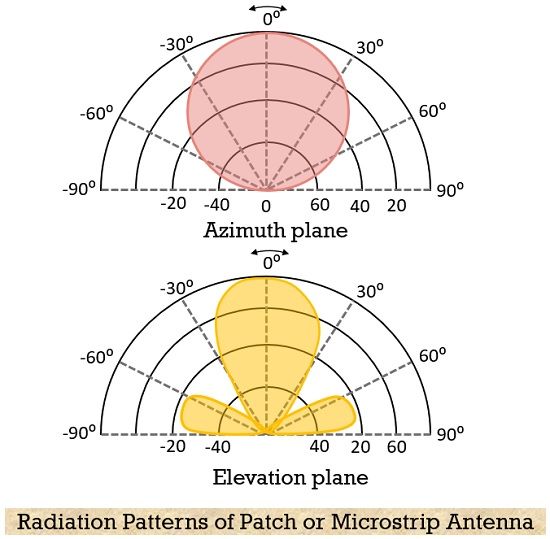
What is Patch (Microstrip) Antenna? Construction, Working, Radiation

15 Radiation pattern of simple patch antenna at 2.415 GHz integrated
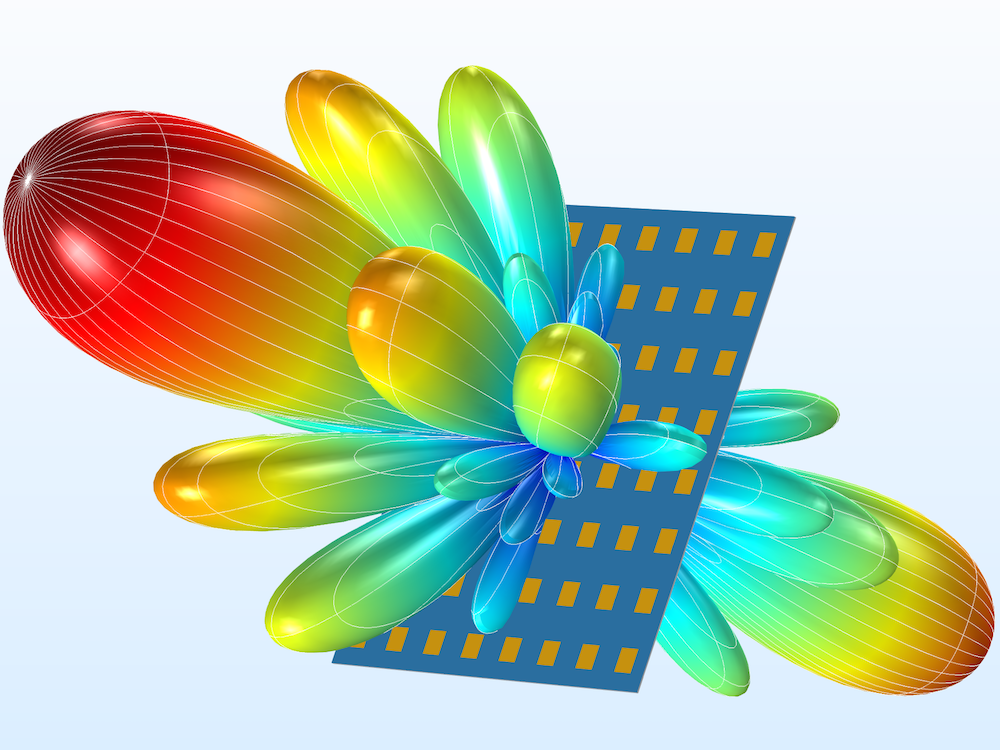
Introduction to Efficiently Modeling Antennas in COMSOL Multiphysics
Web Measuring An Antenna's Radiation Pattern And Gain Is Discussed.
After Waiting, A 3D Radiation Pattern Window Will Show Up.
Topics Include Principles Of Operation, Impedance Matching, Radiation Patterns, Circular Polarization, Bandwidth, Efficiency, Alternative Feed Types, Stacked Patches And Higher
Microstrip Or Patch Antennas Find Uses In Applications That Require Low Profile Antennas Without Compromising Performance.
Related Post: